Chemical Safety Awareness Course Overview:
A Chemical Safety Awareness Course is designed to educate individuals about the potential hazards associated with handling and working with chemicals. The course aims to promote a safe working environment and ensure that participants understand the necessary precautions to prevent accidents and injuries. Below is a general outline of the course contents for a Chemical Safety Awareness Course:
Chemical Safety Awareness Course Objective:
Module 1: Introduction to Chemical Safety
1.1 Overview of Chemical Safety
- Importance of chemical safety
- Regulatory requirements
1.2 Types of Chemical Hazards
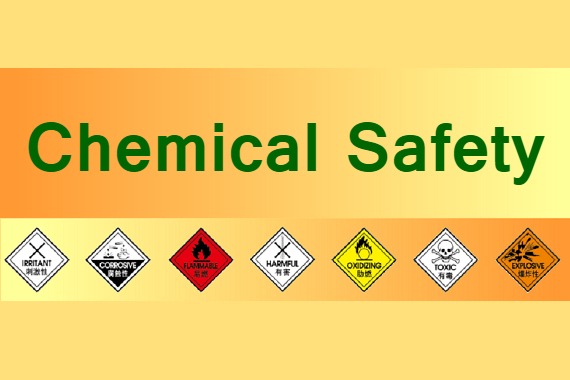
- Chemical classifications (flammable, corrosive, toxic, etc.)
- Physical and health hazards
1.3 Routes of Exposure
- Inhalation, ingestion, skin contact, and eye contact
Module 2: Hazard Communication (HazCom)
2.1 Hazard Communication Standard (HCS)
- Understanding safety data sheets (SDS)
- Labeling requirements
2.2 Chemical Labels
- Interpretation of chemical labels
- Symbols and pictograms
Module 3: Personal Protective Equipment (PPE)
3.1 Selection and Use of PPE
- Understanding different types of PPE
- Proper use and maintenance
3.2 Emergency Eyewash and Shower Facilities
- Importance and proper usage
Module 4: Safe Handling and Storage
4.1 Storage Guidelines
- Segregation of incompatible chemicals
- Storage temperature and conditions
4.2 Handling Procedures
- Techniques for safe chemical handling
- Spill response and cleanup
Module 5: Risk Assessment and Control Measures
5.1 Risk Assessment
- Identifying potential risks
- Hazard analysis
5.2 Control Measures
- Engineering controls
- Administrative controls
Module 6: Emergency Response
6.1 Emergency Procedures
- Evacuation plans
- First aid measures
6.2 Fire Safety
- Fire prevention measures.
- Proper use of fire extinguishers
Module 7: Case Studies and Demonstration
7.1 Real-life examples of chemical incidents
- Analysis of incidents and lessons learned.
7.2 Demonstrations of Equipment’s
- Proper use of safety equipment
- Emergency response simulations
Module 8: Regulatory Compliance
8.1 WSH Act, Singapore Standards and Guidelines
- Compliance requirements
- Inspections and audits
8.2 Local and International Regulations
- Understanding regional regulations
Module 9: Best Practices and Continuous Improvement
9.1 Establishing a Safety Culture
- Employee engagement
- Reporting and addressing safety concerns
9.2 Continuous Improvement
- Regular reviews and updates to safety procedures
Module 10: Assessment and Certification
- Final examination Theory 30 MCQ
- Course completion certificate
This course should be adapted to the specific needs of the audience and may vary based on local regulations and industry-specific requirements. Additionally, incorporating interactive elements such as quizzes, discussions, and hands-on activities can enhance the learning experience.
Why should attend Chemical Safety Awareness Course (CSAC)?
1. Enhance Safety and Minimize Risks
- Gain essential knowledge about chemical hazards and their potential risks to health, safety, and the environment.
- Learn how to implement proper handling, storage, and disposal practices to prevent accidents and incidents.
2. Understand Legal Compliance
- Familiarize yourself with Workplace Safety and Health (WSH) regulations and standards related to chemical safety.
- Avoid penalties and ensure compliance with local laws, such as Singapore’s Workplace Safety and Health (General Provisions) Regulations and Environmental Protection Acts.
3. Improve Emergency Preparedness
- Learn how to respond effectively to chemical spills, leaks, and other emergencies.
- Gain skills in using personal protective equipment (PPE) and first-aid measures for chemical exposure incidents.
4. Protect Health and Well-being
- Understand the short-term and long-term health effects of chemical exposure, including irritations, burns, respiratory issues, and chronic conditions.
- Learn measures to safeguard yourself and others against chemical-related hazards.
5. Boost Workplace Productivity
- A safe and well-informed workforce minimizes downtime caused by accidents and incidents.
- Promote a safety-conscious culture, leading to better morale and efficiency among employees.
6. Raise Environmental Awareness
- Understand the environmental impact of improper chemical handling.
- Learn best practices for sustainable and eco-friendly chemical management.
7. Build Professional Expertise
- Enhance your qualifications and competency in handling chemicals safely, making you a more valuable asset to your organization.
- Stay updated with best practices and industry standards for chemical safety.
8. Prevent Financial Losses
- Reduce costs associated with chemical-related accidents, such as medical expenses, legal penalties, and equipment damage.
- Improve resource management to avoid wastage and inefficiency.
Who should attend Chemical Safety Awareness Course (CSAC)?
1. Workers Handling Chemicals
- Employees who work directly with chemicals in their daily tasks, such as in:
- Manufacturing
- Construction
- Laboratories
- Chemical processing plants
- Cleaning and maintenance operations
2. Supervisors and Managers
- Supervisors overseeing teams that handle chemicals or are responsible for implementing chemical safety measures.
- Managers who need to ensure compliance with workplace safety standards and regulatory requirements.
3. Safety and Health Professionals
- Workplace Safety and Health Officers (WSHO) or Environmental Health and Safety (EHS) personnel.
- Safety coordinators or advisors responsible for chemical risk assessments and incident prevention.
4. Facility Operators
- Operators of facilities where chemicals are stored, transported, or disposed of, such as warehouses, storage depots, or hazardous waste sites.
5. Maintenance Teams
- Technicians and maintenance staff who may come into contact with hazardous chemicals during equipment repairs or routine facility upkeep.
6. Laboratory Personnel
- Lab technicians, researchers, and students working with chemicals in research, testing, or educational settings.
7. Emergency Responders
- Firefighters, paramedics, and hazardous material (HAZMAT) response teams who deal with chemical spills or emergencies.
8. Procurement and Inventory Staff
- Personnel responsible for purchasing, storing, or managing inventory of chemical substances.
9. Anyone Involved in Chemical Transport
- Logistics personnel, drivers, or workers involved in the transportation of hazardous substances.
10. Employers or Business Owners
- Employers in industries where chemicals are used, stored, or transported, to ensure workplace compliance and employee safety.
Chemical Safety Awareness Pre-Requisites / Assume Skills and Knowledge
1. Basic Literacy and Numeracy in CSAC
- Ability to read and understand written instructions, labels, and safety data sheets (SDS).
- Basic mathematical skills to interpret chemical quantities, ratios, or exposure limits.
2. Awareness of Workplace Safety
- A general understanding of workplace safety practices and procedures.
- Familiarity with personal protective equipment (PPE) and its usage.
3. Industry or Job Experience (Optional)
- Experience in roles involving handling, storing, or transporting chemicals is beneficial but not mandatory.
- Familiarity with the workplace environment where chemicals are used can enhance learning.
4. Communication Skills
- Ability to communicate clearly and ask questions during the course.
- Comfortable working in a group setting during practical exercises or discussions.
5. Basic Computer Literacy (if online components are included)
- Understanding how to use a computer or tablet to access course materials, especially for virtual or blended learning options.
6. No Prior Chemical Knowledge Required
- The course is designed for beginners and covers foundational knowledge of chemical safety, making prior technical knowledge about chemicals unnecessary.
Trainer to Trainee Ratio
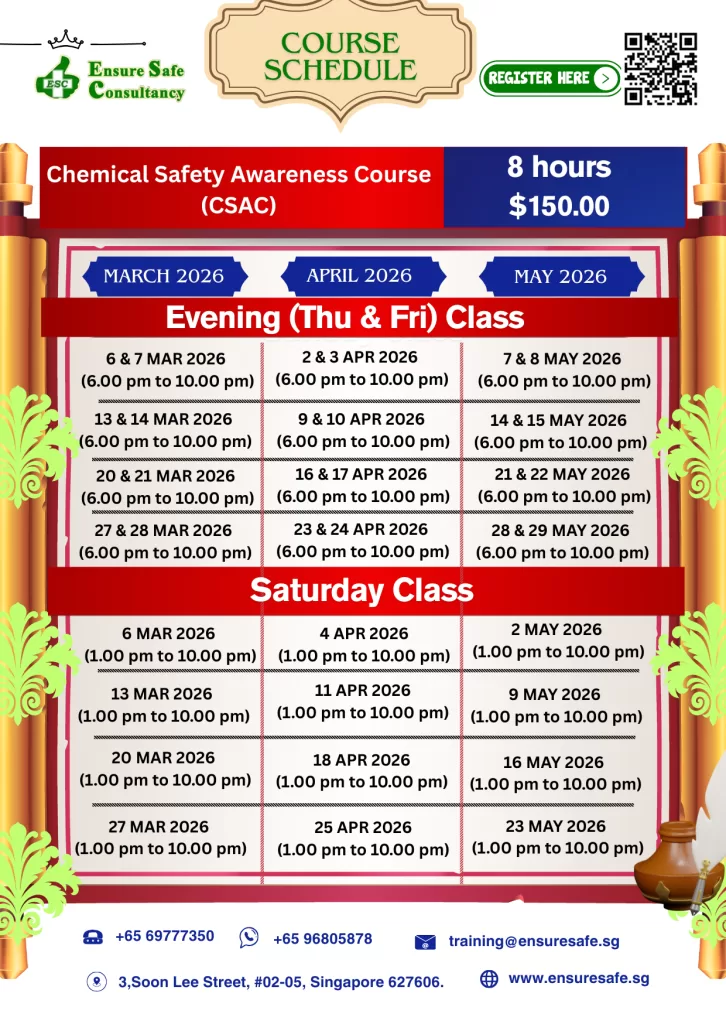
1: 20 (Classroom)
Course Duration
9 hours (Training 8 hours, Assessment 1 hour)
Attendance requirements
100%
Assessment
Written MCQ- Learner must achieve 60%
Training Methodology
Lecture Slides presentation, self-directed learning, e-learning, group discussion, presentation sharing of best practice and incident. Hands on practical session.
Certifications
Upon successful completion of the course a Certificate of Competency will be awarded by Ensure safe Consultancy Pte Ltd.
Course Fees
$150/-
Course Venue
No. 3 Soon Lee Street, #02-05, Pioneer Junction, S (627606).
Contact Details
training@ensuresafe.sg
+65 9680 5878
+65 69777350
Course Features
- Lecture 0
- Quiz 0
- Duration Lifetime access
- Skill level All levels
- Language English
- Students 1
- Certificate Yes
- Assessments Yes